

We’re headed into the last quarter of 2026. October through December can move quickly, especially for business owners who are balancing clients, employees, sales, bookkeeping, and year-end responsibilities.
Before Q4 begins, this is a good time to ask yourself:
What do I want my business to accomplish before December 31?
You don't need a complicated strategic plan. Start with a few meaningful goals, turn those goals into monthly objectives, and then break those objectives into simple weekly tasks.
Here are four areas I recommend putting on your Q4 planning list.
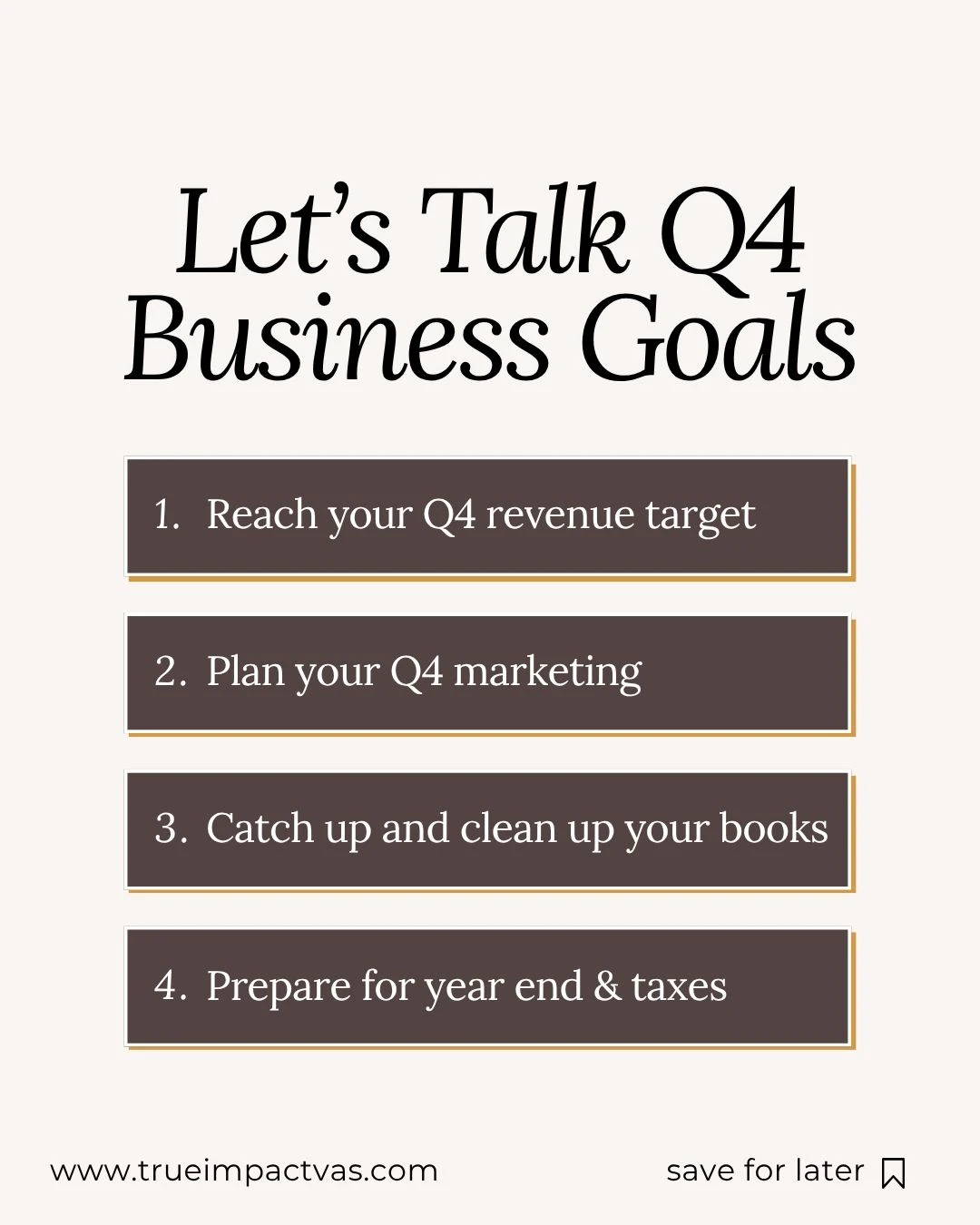
1. Reach Your Q4 Revenue Target
Start with the number.
What revenue would you like your business to generate during the final three months of the year?
Once you have your Q4 target, work backward. Instead of looking at one large quarterly number, determine what needs to happen each month—and ultimately each week.
For example, if your Q4 revenue goal is $90,000, that becomes approximately:
$30,000 per month → $7,500 per week
Then ask what actually drives that revenue. Depending on your business, that could be new clients, recurring contracts, appointments, proposals, products sold, or average customer value.
This is where KPIs become valuable. Don't just track the final revenue number. Track the activities that help produce it.
2. Plan Your Q4 Marketing
Don't wait until November to decide how you're going to generate year-end business.
Look at what has worked so far in 2026.
Which marketing activities brought you your best customers? Which referral sources produced actual business? Which campaigns generated leads but few sales?
Then decide where your time and marketing dollars should go during Q4.
Your plan doesn't have to be complicated. Choose a few measurable activities and be consistent.
Rather than simply saying, "I need to do more marketing," create a measurable goal such as:
"I will make five referral-partner connections and follow up with five prospective clients each week."
Now you have something you can actually track.
3. Catch Up and Clean Up Your Books
Q4 is not the time to discover that your bookkeeping hasn't been reconciled since May.
Before year-end, review the health of your books. Make sure bank and credit card accounts are reconciled, transactions are categorized correctly, accounts receivable and accounts payable are accurate, payroll is properly recorded, and outstanding bookkeeping questions are being resolved.
Also review your Profit & Loss and Balance Sheet.
Do the numbers make sense?
Clean books aren't just about tax preparation. Accurate financial information helps you make better decisions while there is still time to act.
If margins are declining, expenses are increasing, or customers are taking longer to pay, knowing that in September or October gives you an opportunity to respond before the year is over.
4. Prepare for Year-End & Taxes
April may feel far away, but good tax preparation starts before December 31.
Q4 is an opportunity to communicate with your tax professional and make sure your financial records are ready.
Review contractor information and W-9s, fixed asset purchases, estimated tax needs, retirement or benefit considerations, outstanding receivables and payables, and any unusual transactions that occurred during the year.
Your tax professional can provide guidance specific to your situation, but they can give you much better advice when your bookkeeping is current and your financial reports are accurate.
Turn Your Goals Into Weekly Actions
Here's the part business owners sometimes miss:
A quarterly goal isn't an action plan.
If your goal is to increase revenue, improve profitability, clean up your books, or generate more leads, ask:
What needs to happen in October?
What needs to happen in November?
What needs to happen in December?
Then take each monthly objective and turn it into small weekly actions.
Those weekly actions are what move the numbers.
And this is one reason I believe business owners should look beyond traditional financial reports. Your Profit & Loss tells you what has already happened. Your KPIs and dashboard can help you see whether you're moving toward what you want to happen next.
What Are Your Q4 Goals?
Before Q4 begins, choose three or four priorities that will make the biggest difference in your business by December 31.
Don't try to improve everything at once.
Set the goal. Define the number. Break it into monthly objectives. Create the weekly actions. Then track your progress.
At True Impact Virtual Advisory Services (TIVAS), I help business owners connect their bookkeeping, financial data, and KPIs so their numbers become useful tools for decision-making—not simply reports they look at after the month is over.
Whether you need cleaner books, better visibility into your financial performance, or a KPI dashboard that keeps your most important goals in front of you, the objective is the same:
Know your numbers. See where you're going. Make better decisions before the year ends.
Shannan Hamilton
Founder | True Impact Virtual Advisory Services
Bookkeeping • KPI Dashboards • Business Advisory